



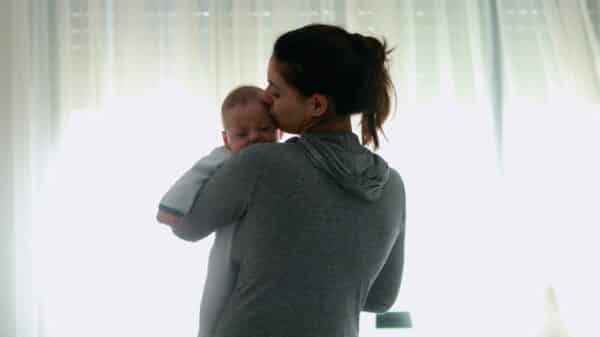
















Stepping into motherhood is often described as a beginning, but for many, it feels like an abrupt departure from the self. At 23, I was legally an adult, yet the birth of my son propelled me into a role that I am only now, two decades later, beginning to fully process. I remember a specific afternoon, holding my sleeping infant and catching my reflection in a full-length mirror. The woman looking back appeared capable and real, yet I felt a profound sense of disconnection. I found myself staring at a stranger, wondering where the person I used to be had gone.
Decoding the Specific Loneliness of New Motherhood
This sense of displacement is more than just “baby blues”; it is a documented psychological phenomenon. A recent study from Finland, featured in the International Journal of Qualitative Studies on Health and Well-being, categorizes the isolation new mothers face into three distinct branches: social, emotional, and existential. While social loneliness stems from a changing social circle and emotional loneliness relates to a lack of deep connection, existential loneliness is far more complex.
Existential loneliness is the feeling of being “lost in the role.” It is the sensation of being forgotten as an individual and reduced to a functional entity—a “feeding machine” or a “caregiving tool.” This isn’t the type of isolation that can be cured by a coffee date with a friend or a partner helping more with household chores. It is a fundamental crisis of identity where the mother feels invisible to the world and, more painfully, to herself.
Experts at Seed Mother, a maternal education program developed at Columbia University, refer to this as part of “matrescence”—the developmental transition into motherhood. They note that mothers frequently report feeling unacknowledged or numb, as if their personal needs have become irrelevant in the face of their new responsibilities. Both the Finnish study and the concept of matrescence point to the same reality: the process of becoming a mother often involves feeling completely unfamiliar with your own life.
Why External Support Systems Can Fall Short
A common misconception is that a strong support network—a present partner, helpful relatives, or attentive friends—will automatically prevent maternal loneliness. However, existential loneliness is internal. It is a fracture in the relationship a woman has with herself. When a mother feels disconnected from her own identity, even the most well-meaning external support can fail to bridge the gap.
In fact, when society or healthcare providers ignore this internal shift, the sense of isolation often intensifies. If a mother’s struggle is dismissed because she “has so much help,” it reinforces the idea that her internal experience doesn’t matter, deepening the divide between her outward life and her inner reality.
Acknowledging the Role of Grief in Identity Shifts
Culturally, we often frame motherhood as a period of pure celebration, which leaves little room for the very real grief that accompanies it. Mothers frequently mourn their former lives: their independence, their professional identities, and their sense of control. This grief is complicated because it exists alongside intense love for the child.
Our society struggles to hold two conflicting truths at once. You can be deeply grateful for your child and simultaneously heartbroken over the loss of your old self. Because standard postpartum screenings often focus on clinical mood disorders, they frequently miss this identity-based struggle. If we don’t recognize this as a normative, developmental shift rather than a clinical failure, we cannot provide mothers with the validation they need to move through it.
The Cyclical Nature of Matrescence
Identity shifts in motherhood do not follow a straight line. Many assume the hardest part is the “fourth trimester,” but the feeling of being lost can resurface long after the newborn phase. It often hits when life is supposed to be “back to normal”—when the baby sleeps, the mother returns to work, and the immediate crisis has passed. This cognitive dissonance—looking fine on the outside while feeling like a stranger on the inside—can be jarring.
Matrescence is cyclical, often re-emerging during major transitions like having a second child, children starting school, or kids gaining independence. For some, it takes a major life change to force the space needed for self-discovery. In my own journey, it wasn’t until my children were older and my domestic situation shifted that I truly began to excavate the person I was outside of my roles as a mother and a partner. Sometimes, having dedicated time to yourself isn’t about escaping your children; it’s about finally finding the container to hold your own identity.
Integrating the New Self After Motherhood
Moving through existential loneliness isn’t about “getting back” to who you were before. Instead, it is about integration—blending your past self with your current reality to become a more expanded version of yourself. Research into maternal education shows that when mothers understand the concept of matrescence, they report higher levels of self-trust and emotional resilience. They move from feeling “reduced” to feeling “evolved.”
There is a growing call for healthcare providers to look beyond basic mood checklists and start asking deeper questions about identity. Asking a mother if she feels invisible or how she is navigating her changing sense of self can be transformative. Understanding that this “in-between” feeling is a standard part of the process—rather than a personal malfunction—changes the narrative from one of disappearance to one of becoming.
Final Thoughts on Maternal Identity
The transition into motherhood is one of the most significant identity shifts a human can experience. If you feel lost, invisible, or like a stranger in your own life, know that these feelings are a recognized part of the maternal development process. By acknowledging the grief of the old self and the complexity of the new one, mothers can begin to move from a state of isolation to one of clarity. You are not losing yourself; you are evolving into a more integrated version of who you were always meant to be.